Why Does Sweet Potato Starch Quality Affect Noodle Texture?
Have you ever wondered why some glass noodles stay springy after cooking, while others turn mushy and break apart? The answer lies in the raw material — sweet potato starch. As a manufacturer based in Lulong County, known as the "Hometown of Sweet Potatoes in China," we have worked with noodle factories for years. In this article, we share the three key quality parameters that determine noodle texture from a producer's perspective.
The Gel Strength Difference
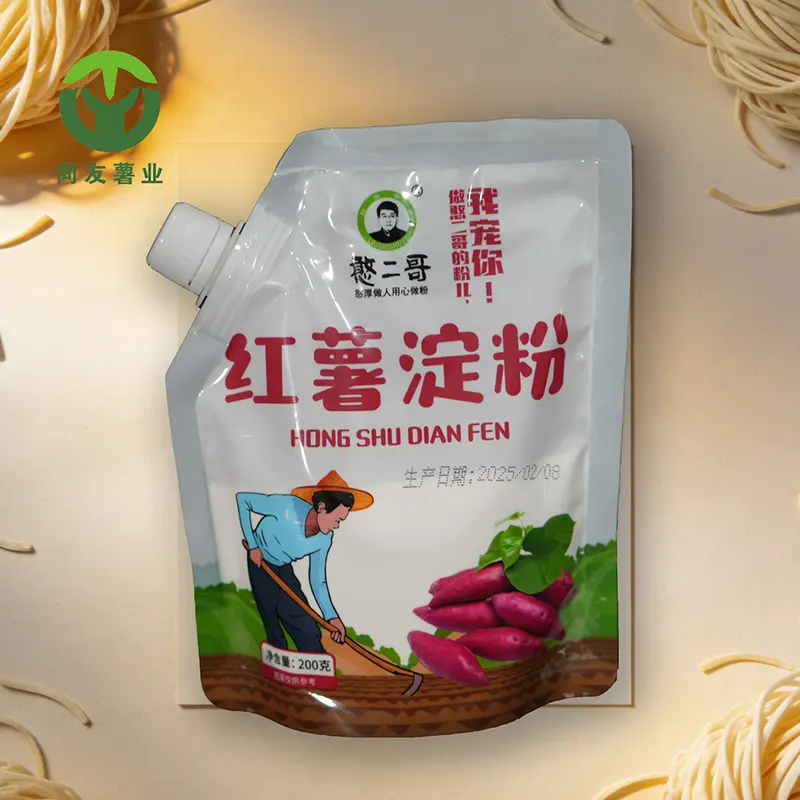
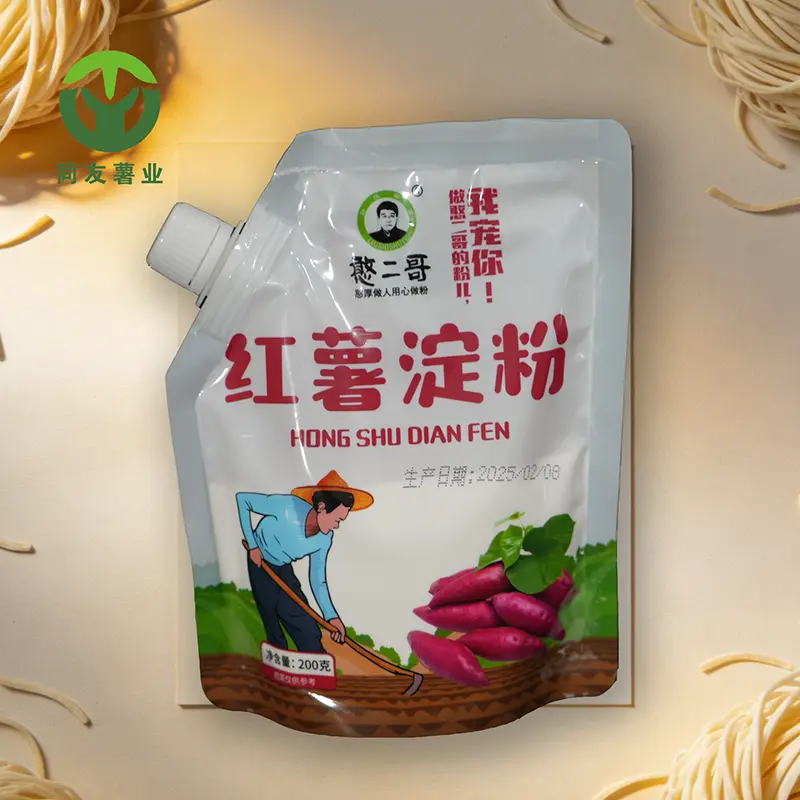
Starch with consistent gel strength forms a stable network when cooked, giving noodles that desirable chewy bite. Low-quality starch, on the other hand, may produce weak gels that break easily during boiling. In our HACCP-certified production line, every batch is tested for gel strength before release. This is why experienced noodle factories test this parameter before placing bulk orders — it is the single most important factor for noodle texture.
Moisture Content Matters More Than You Think
Moisture content is another critical factor. Starch with too much moisture (above 14%) can clump during storage and cause uneven cooking. It also shortens shelf life and increases shipping costs because you are paying for water weight. At our factory, we control moisture tightly through our thermal drying process, ensuring every batch performs consistently in our customers' production lines.
Granularity Affects Cooking Performance
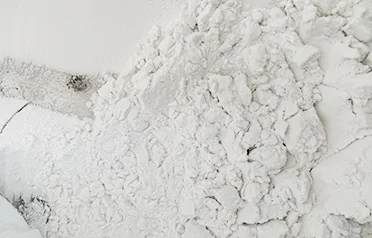
Fine starch (99% passing through 100 mesh) dissolves more evenly and produces smoother noodles. Coarse starch granules may leave undissolved particles, leading to texture inconsistency. Our food-grade sweet potato starch passes through 100-mesh sieving as a standard step, which is why noodle factories choose us as their long-term supplier.
For noodle and vermicelli producers, investing in higher-quality sweet potato starch pays off through better product consistency, fewer production defects, and happier customers. We provide free samples for your own production testing — contact us to compare the difference for yourself.
Related News
- How do you vet a reliable manufacturer when importing sweet potato vermicelli from China?
- What quality checks must sweet potato vermicelli undergo before leaving the factory?
- How Did Sweet Potato Starch from Qinhuangdao’s Tongyou Potato Industry Reach South Korea and Vietnam?
- Where Is Sweet Potato Starch Used? Qinhuangdao Tongyou Potato Industry Explores Its Applications
- How to Choose Sweet Potato Starch and Sweet Potato Vermicelli with Confidence? A Visit to Qinhuangdao Tongyou Potato Industry Co., Ltd.
- Why Do South Korean Buyers Import Sweet Potato Starch from Lulong? A Look at the Loading and Shipment Process at Tongyou Potato Industry
Leave me a message