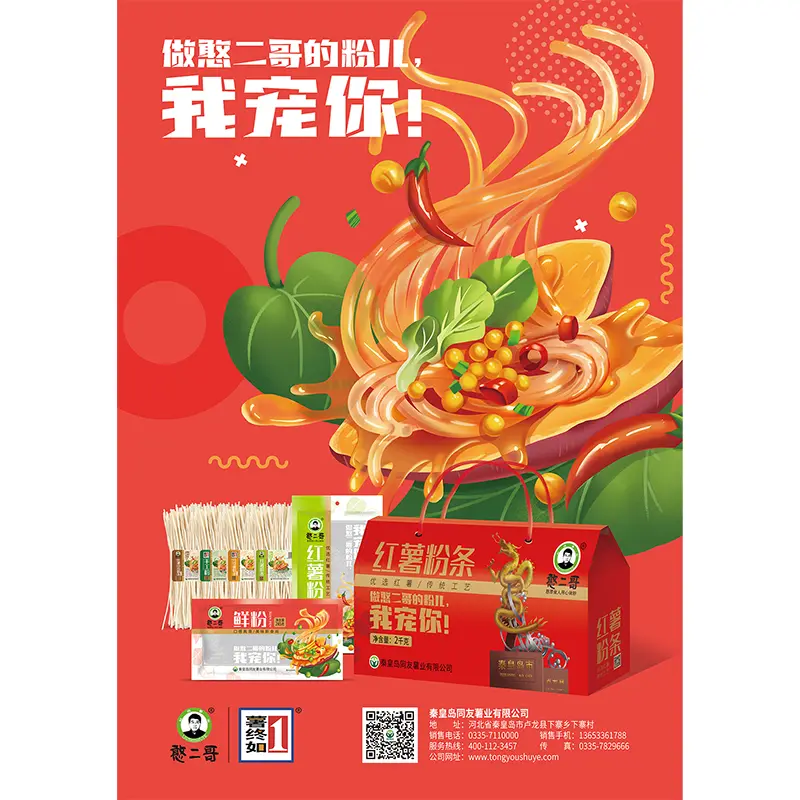
China Bagged Sweet Potato Starch Manufacturer
In the world of cooking and food manufacturing, the choice of starch directly impacts the texture, consistency, and quality of the final dish. Among the many options available, bagged sweet potato starch stands out as a remarkably versatile and reliable ingredient, prized for its unique thickening power and the silky, translucent finish it imparts. We source and supply premium bagged sweet potato starch under the established brand Tongyou, a name that has become synonymous with consistency and purity in the food ingredient sector. For generations, kitchens across continents have relied on sweet potato starch to create everything from chewy noodles and crispy fried coatings to delicate sauces and traditional desserts.
FAQ
How should bagged sweet potato starch be stored to maintain its quality over a long period?
Proper storage is fundamental to preserving the functional integrity and microbial safety of sweet potato starch. First, the product must always be kept in a cool, dry environment, ideally with an ambient temperature consistently below 25°C and a relative humidity below 65%. The original multi-wall paper bag with an inner polyethylene liner, as used by Tongyou, is designed to be an effective moisture barrier. Once a bag is opened, it is crucial to reseal it tightly after each use. We advise customers to use a sturdy bag clip or to transfer the remaining starch to an airtight, food-grade plastic container. The entire storage area must be kept pristine with a comprehensive pest management protocol, as dry, powdery goods can attract insects. Do not store the opened bag near strong-smelling compounds like spices, cleaning agents, or chemicals, because the fine starch granules possess a large surface area and are highly susceptible to adsorbing volatile aromatic compounds. When these simple conditions are met, the unopened Tongyou product has a shelf life of 18 to 24 months from the production date. The integrity of the bag is a key part of this longevity. Our packaging is engineered to block light ingress, which helps prevent oxidative degradation that could otherwise lead to a gradual decline in whiteness and paste viscosity over time.
Is Tongyou bagged sweet potato starch gluten-free and safe for people with celiac disease or gluten sensitivity?
Yes, it is inherently and completely gluten-free. Gluten is a composite of storage proteins found exclusively in wheat and related cereal grains like barley, rye, and triticale. Sweet potato, being a root tuber, belongs to a completely different botanical class and does not contain any gluten proteins. However, for a product to be reliably labeled and used as gluten-free, we must address the risk of cross-contamination. It is produced in a dedicated facility that processes only root and tuber starches. No wheat, barley, rye, or oat products are handled on the same production lines, eliminating the most common vector for gluten cross-contact. Furthermore, our final product batches are tested using ELISA (Enzyme-Linked Immunosorbent Assay) methods to verify that gluten levels are below the universally accepted threshold of 20 parts per million, often abbreviated as below 20 ppm. This rigorous, validated segregation gives chefs and food manufacturers complete confidence.
What is the best way to create a lump-free paste or slurry with bagged sweet potato starch?
Achieving a smooth, homogenous slurry is the first critical step in any recipe using bagged sweet potato starch. The primary rule is to always use cold, preferably room-temperature or chilled, liquid. If you sprinkle Tongyou bagged sweet potato starch directly into a hot liquid, the starch granules on the outside will immediately gelatinize and form a waterproof, rubbery shell that seals dry, unhydrated starch inside. These are the lumps you then struggle with. To prevent this, measure the starch into a separate, dry bowl. Add an amount of cold water or stock that is roughly twice the volume of the starch. Use a whisk and stir vigorously until a completely smooth slurry with the consistency of thin cream is formed. There should be no visible dry pockets. This initial cold mixing allows the individual starch granules to become suspended in the liquid without swelling. Only then should the slurry be poured in a slow, steady stream into your hot cooking liquid, while continuously and rapidly whisking the pot. The gradual introduction and the constant stirring give every granule equal access to heat and water, ensuring uniform swelling and a perfectly smooth, glossy, thickened sauce.
What are the key differences between bagged sweet potato starch and potato starch in noodle making?
Though both are tuber starches, their behavior in noodle manufacturing is distinct and dictates their use. Sweet potato starch has a lower gelatinization onset temperature and a granule structure that results in a paste that is significantly more cohesive and stringy compared to potato starch. When you make noodles with Tongyou sweet potato starch, the resulting cooked noodle has a high degree of elasticity, a chewy, resilient mouthfeel, and a brilliant, toothpaste-like transparency. This is the defining texture of Korean japchae noodles or Sichuan sweet potato jelly noodles. In contrast, potato starch tends to create a noodle that has a softer, more tender bite and a slightly more clouded, grayer transparency, which can become slimy on the surface much more easily if overcooked. Potato starch is often blended with sweet potato starch to moderate the latter’s formidable chewiness and to add a bit of soft tenderness. An all-sweet-potato-starch noodle can be quite tough if stretched too thin.
In what ways can Tongyou improve the texture of gluten-free baked goods?
Gluten-free baking often struggles with a dry, crumbly, and gritty texture because of the absence of the elastic gluten network. Tongyou sweet potato starch is an excellent functional tool to address these challenges when used in a carefully designed blend with whole grain flours and other starches. The mechanism is primarily moisture retention. During baking, the high water-binding capacity of the starch allows it to gelatinize and capture a significant amount of water, which translates directly to a moister, softer crumb in the finished cake, muffin, or bread. Moreover, the nature of the gel is not stiff and brittle; it contributes a pleasant, soft cohesiveness and a slight springiness that mimics the chew of gluten. For this reason, it is superior to many other native starches that might form a firm, brittle gel upon cooling, which exacerbates dryness.
What is the correct method for preparing a frying batter using bagged sweet potato starch to achieve an extra-crispy crust?
The secret to a shell-like crispy crust, such as that found on Chinese sweet and sour pork or Japanese karaage, lies in the pure starch batter. A simple, highly effective batter can be made by hydrating Tongyou sweet potato starch with cold, possibly sparkling, water. The ratio is usually around 1 part starch to 0.8 parts liquid, making a very thick, almost paste-like batter that can cling to the food. There is a crucial physical process at play when this batter hits the hot oil. Wheat flour batters utilize gluten to form a cohesive film, which can absorb oil and steam into a somewhat porous or cakey crust. A pure sweet potato starch batter contains no gluten. Upon contact with the high heat of the oil, the water flashes into steam, and the starch instantly granulates into a dense, tightly cross-linked solid film. This film is non-porous, which means it prevents oil absorption, creating a crust that is audibly crisp, dry to the touch, and shatteringly fragile. Because it is non-porous, it also seals in the juices of the meat or vegetable being fried.
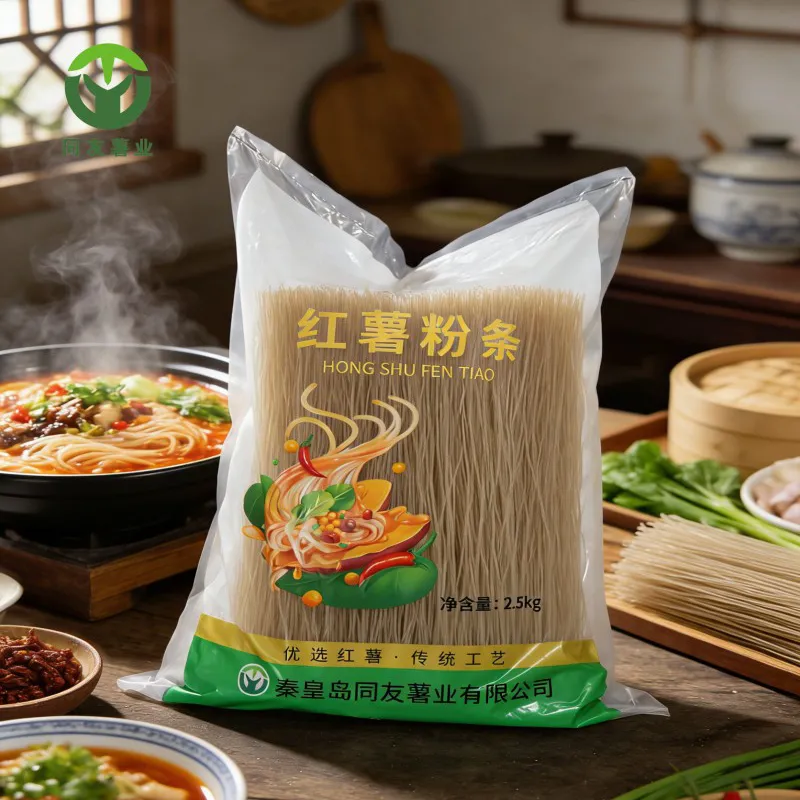
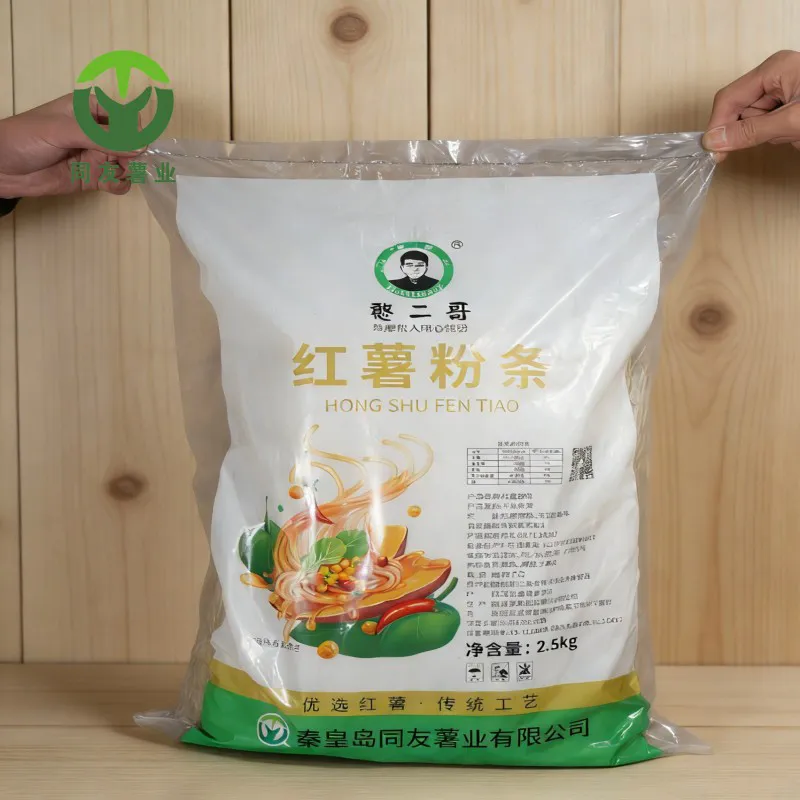
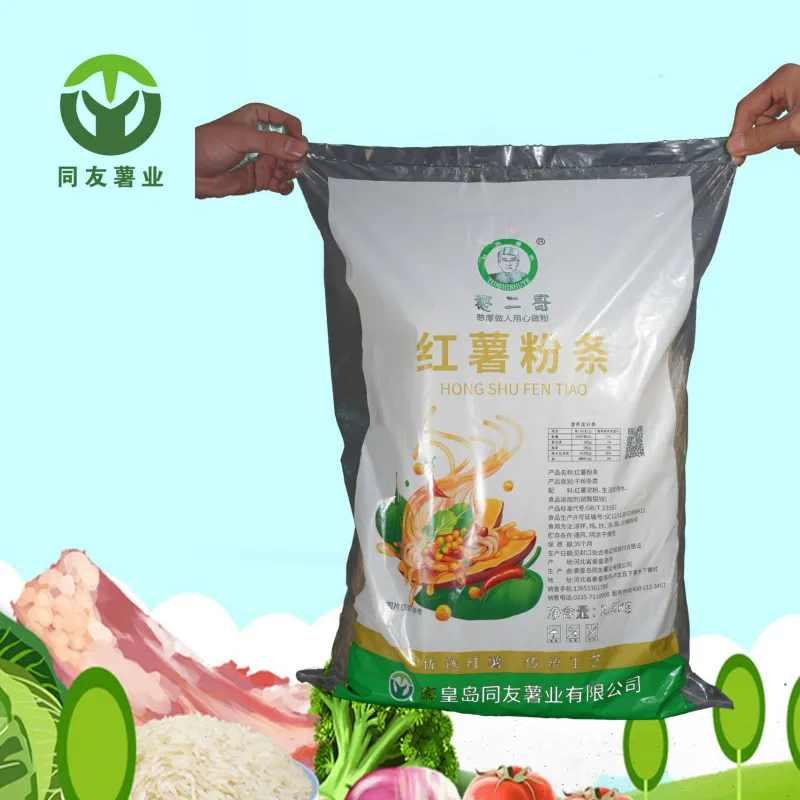
- View as
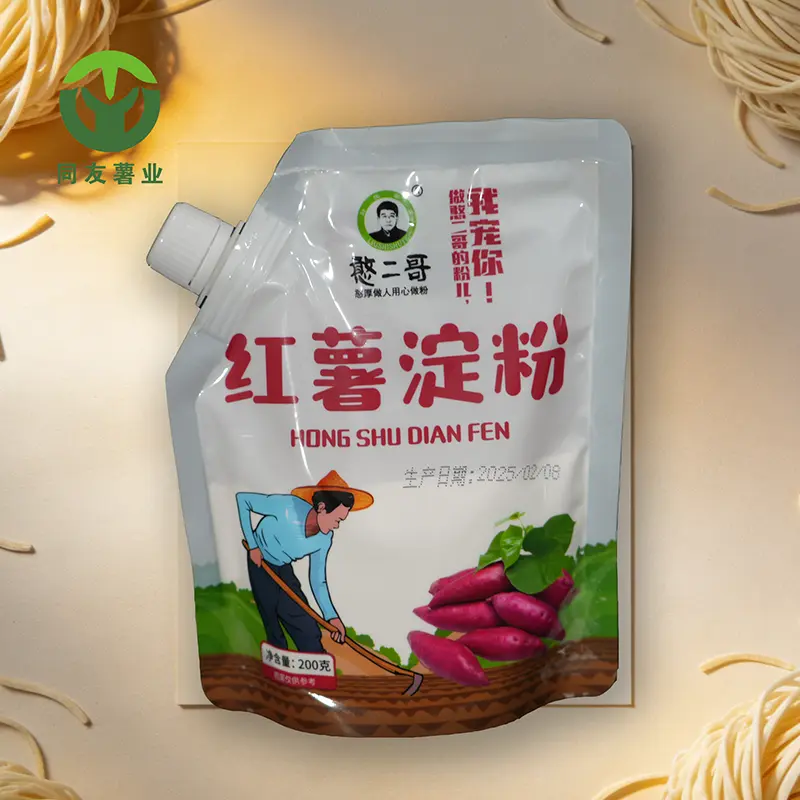
200g Bag Single-Serving Sweet Potato Starch
Tongyou's 200g Bag Single-Serving Sweet Potato Starch is the answer to precise portion control. Perfect for solo diners, dietary tracking, and minimizing waste, it offers exact measurements for small-batch cooking. As a thoughtful manufacturer, Tongyou provides global grocery importers, specialty health-food distributors, and fitness brand networks with factory-direct wholesale pricing, robust OEM private labeling, and rapid free sample dispatch to unlock exceptionally high shelf-turnover velocity and secure long-term retail profitability.
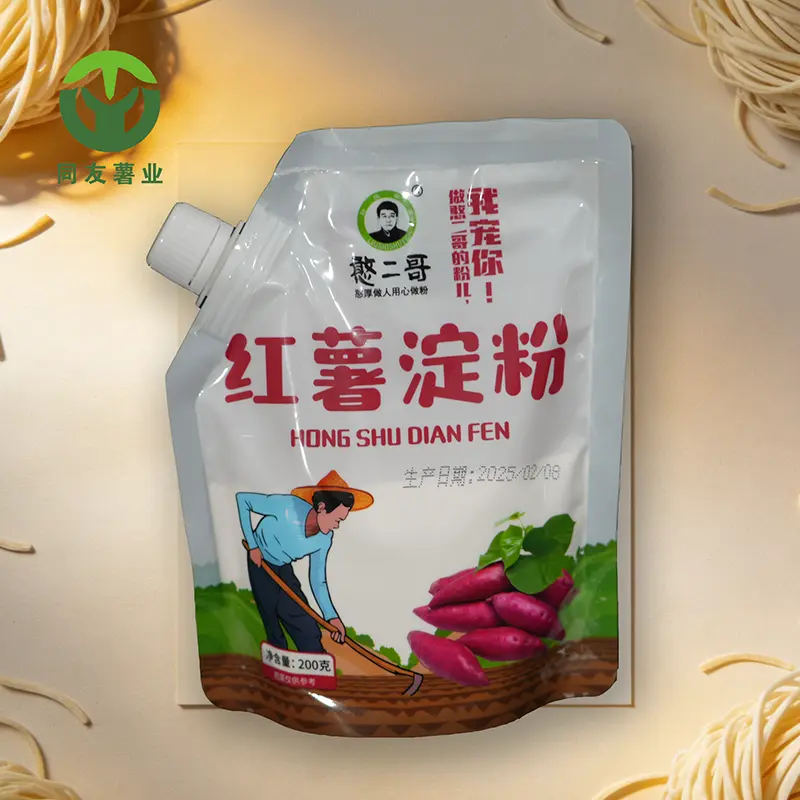
200g Bag On-the-Go Sweet Potato Starch
Capture the fast-growing global "single-person economy" and busy urban lifestyle segments with Tongyou's 200g Bag On-the-Go Sweet Potato Starch, a premium time-saving carbohydrate binder explicitly engineered for high-frequency modern retail channels. This consumer-packaged-good (CPG) transitions standard cooking starch from traditional industrial baking sacks into the high-speed urban kitchen aisle, featuring a moisture-proof pouch that easily fits into busy office desk drawers or fitness meal prep bags. As a leading China factory operating certified modern production lines, Tongyou provides factory-direct wholesale pricing, flexible private labeling (OEM), and complimentary free samples to help grocery distributors, urban supermarket procurement managers, and meal-kit providers unlock rapid inventory turnover and substantial retail profit margins.
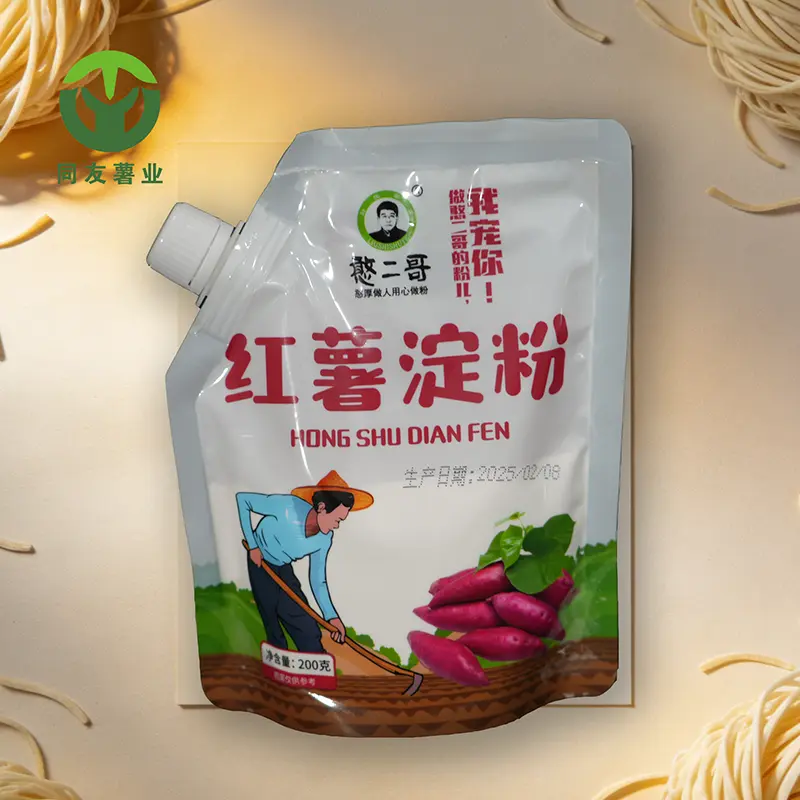
200g Bag Portable Sweet Potato Starch
Maximize your retail margins and tap into the fast-growing global outdoor lifestyle market with Tongyou's 200g Bag Portable Sweet Potato Starch. Specifically designed for modern nomads, RV cooking, and camping meal prep, this product moves starch from the traditional kitchen cabinet into the active lifestyle aisle. Housed in a heavy-duty, puncture-resistant, and resealable standby pouch, it completely eliminates retail shelf breakage and mess. As a specialized B2B partner, Tongyou offers retail-ready branding, flexible MOQ tiers, and immediate sample support tailored for cross-border e-commerce sellers, Amazon distributors, and outdoor supply importers looking for high-turnover consumer goods.
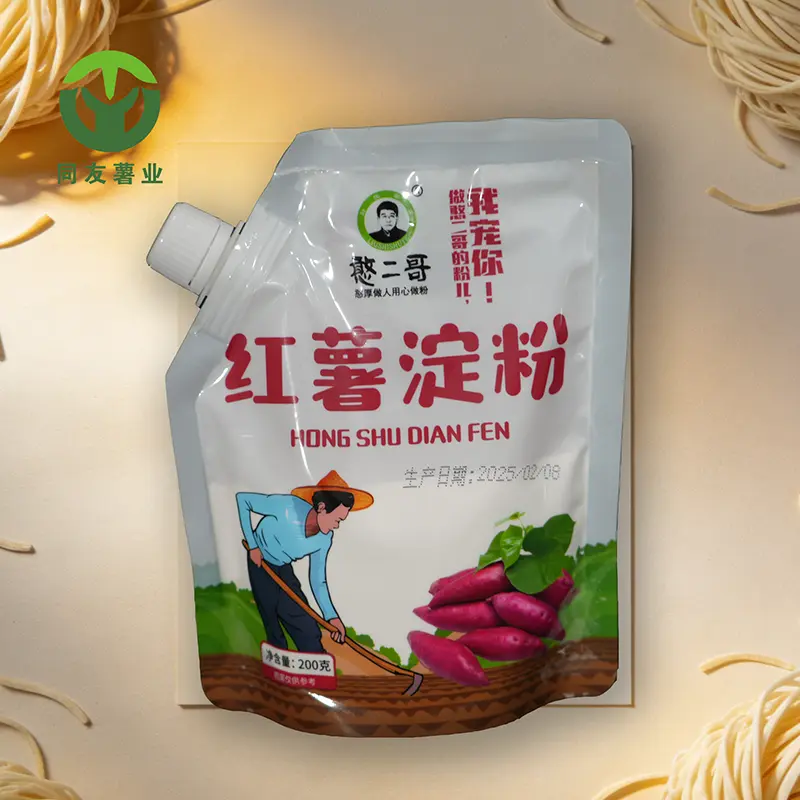
200g Bag Food Grade Sweet Potato Starch
Secure absolute consistency and premium formulation stability for your food business with Tongyou's 200g Bag Food Grade Sweet Potato Starch. Engineered as the gold standard for culinary precision, our starch delivers exceptional gel strength, highly stable viscosity, and neutral clarity. Packaged in a compact, moisture-proof 200g bag, this size is specifically optimized for R&D chefs, flavor laboratories, and small-batch food manufacturers to conduct formula validation without committing to massive industrial sacks. As a certified China manufacturer, Tongyou ensures every batch is free from impurities, fully complying with international food regulations to maximize your product quality.
Tongyou offers Bagged Sweet Potato Starch with consistent quality, flexible solutions and wholesale support, contact us for your purchase needs.