How Do Sweet Potato Starch Plants Keep Supply Steady All Year?
Qinhuangdao Tongyou Sweet Potato Industry Co., Ltd. | Lulong, Hebei, China
By Qinhuangdao Tongyou Sweet Potato Industry Co., Ltd. | Published 19 November 2026
In Lulong County, Hebei Province, a place Chinese growers call the Hometown of Sweet Potato, the sweet potato starch season opens in mid-October and is mostly finished by early November. Three weeks set the raw material for a year. Buyers in Korea, Vietnam and Australia, however, place orders in every month of that year. The gap between the two calendars is what separates a plant that ships on schedule from one that runs dry in April.
The crop sets the first limit. Provincial farm guidance puts harvest between early and late October, timed to leaf yellowing, because roots lifted too early respire heavily and roots left too long risk chilling injury. Curing buys time: holding roots at 35–38°C and 85–90% humidity for two to three days heals skin wounds. After that, a well-run store sits at 10–15°C with 85–90% relative humidity and regular ventilation, and roots can be carried into the following spring, in some regions to mid-May. Past that point, starch yield and colour begin to drift.
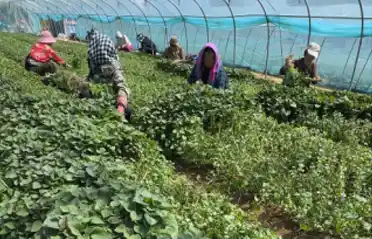
Figure 1. Sweet potato seedlings raised in the company propagation beds at Lulong.
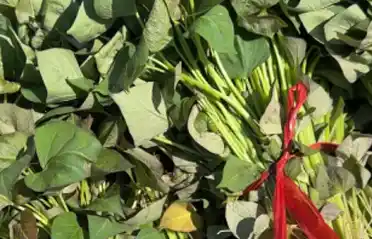
Figure 2. Rooted cuttings bundled and ready for transplanting.
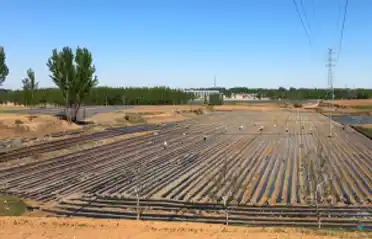
Figure 3. Cuttings transplanted under plastic mulch across the Lulong growing base.
One harvest, twelve months of orders
A sweet potato starch plant therefore runs on two clocks. One is biological: roots must be crushed or stored within weeks of lifting. The other is commercial: a sauce factory in Busan or a noodle maker in Hanoi wants the same specification in March as in October. Plants that hold both usually do four things.
They contract growers across a wider belt instead of one village, so a single wet week cannot erase the season. They cure and ventilate rather than pile roots in a shed. They schedule crushing against storage withdrawals, so fresh inventory keeps moving. And they convert surplus roots into dried starch early, because dry starch in sealed bags holds quality far longer than fresh roots ever will.
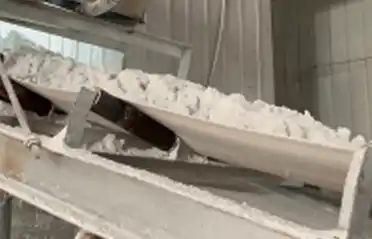
Figure 4. Fresh starch dewatered on the belt line before drying.
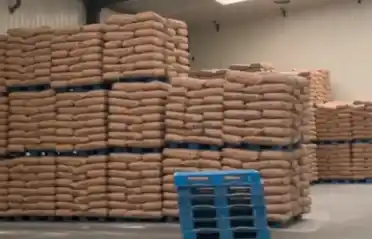
Dried starch is the actual buffer. With moisture inside specification, cool storage and sealed packaging, whiteness, paste viscosity and odour stay stable for months. A buyer who asks only how much fresh stock is on hand is asking half a question. The useful version is how much finished starch is in the warehouse, in which batch, against which test report.
Batches, not promises
Consistency leaves a paper trail. Every production run should carry a retained sample and a certificate of analysis covering moisture, whiteness, fineness and paste viscosity. When an Australian customer opens a 25 kg bag in February, the figures on that sheet should still match the sample approved in September.
Export adds a second layer. A Chinese supplier shipping sweet potato starch needs a food production licence, customs registration and export food producer filing. Qinhuangdao Tongyou Sweet Potato Industry Co., Ltd. has operated in Lulong since 1992 and holds all three.
Public company information lists annual capacity of 30,000 tonnes of fresh roots, 7,000 tonnes of starch and 6,000 tonnes of vermicelli, a 2,000 mu growing base, and shipments to Korea, Vietnam and Australia. Capacity of that size, with its own base and storage yard, is what lets a plant quote the same specification in July as in November.
Three questions before you sign
A purchasing manager can test year-round capability in an afternoon. Ask where the roots are stored and for how long: a plant that cannot describe temperature and ventilation has no storage plan. Ask for the last six certificates of analysis and compare peaks rather than averages. Ask who holds the customs and export filing, because an intermediary adds a handover step that direct factory supply does not.
Sweet potato starch is a three-week crop turned into a twelve-month ingredient. The plants that keep that promise are not the ones with the biggest warehouse, but the ones whose storage, drying and batch records fit together.
FAQ
When is the harvest window?
Roots are lifted from mid-October to early November in Lulong and much of north China. Crushing runs through the storage season that follows, so output does not stop when digging ends.
How long can roots be held?
After curing at 35–38°C and 85–90% relative humidity for two to three days, roots are stored at 10–15°C with regular ventilation and can be carried into the following spring.
Can a factory deliver in the off-season?
Yes, when dried starch is kept sealed and cool and every batch carries a retained sample and a certificate of analysis that matches the approved specification.
Related News
- Sweet Potato Starch vs Cassava and Corn: Which Thickens Best?
- How Long Should You Soak Sweet Potato Vermicelli Before Cooking It?
- Where to Source Trusted Sweet Potato Starch and Sweet Potato Vermicelli From Chinese Agricultural Exhibitors?
- How Do You Choose High-Purity Sweet Potato Starch for Noodles?
- How Can Businesses Source Reliable Sweet Potato Vermicelli from China?
- Why Does Sweet Potato Starch Quality Affect Noodle Texture?
Leave me a message
New Products


News Recommendations